
Are there scimitar-horned oryx at Whipsnade Zoo?
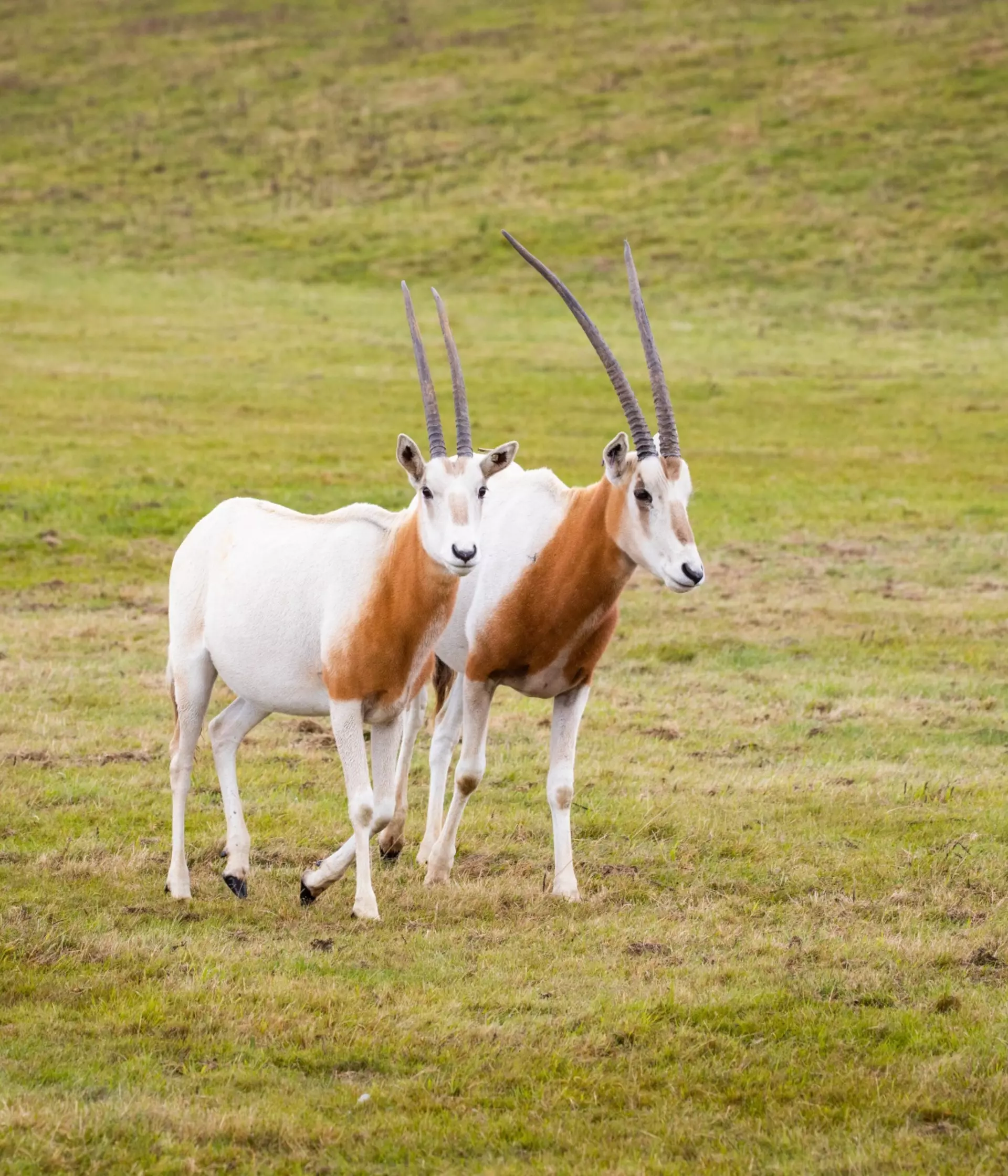
Whipsnade Zoo is home to a herd of scimitar-horned oryx – look out for them close to our Africa Outpost catering outlet, not far from our African lions and ostriches.
Whipsnade Zoo is a conservation zoo, and we’ve been breeding oryx for more than 30 years. In 2014, two of our females were transferred to Abu Dhabi to help to establish a genetically diverse “world herd” to be reintroduced to the wild.
Learn more about the ground-breaking reintroduction
What does a scimitar-horned oryx look like and how is it adapted to its habitat?
The scimitar-horned oryx is an antelope species with long sickle shaped horns found on both males and females. These horns can be over a metre in length and are used to defend themselves and their young from predators.
Calves are born with beige fur. As they grow, they develop a white coat, which helps to keep them cool by reflecting sunlight, they have reddish brown necks and black/brown facial markings.
Adaptations to their desert environment also include broad flat hooves, helping them to walk across sand. Their specialised kidneys also enable them to survive for around 9 months without water getting most of the water they need from the plants they eat.
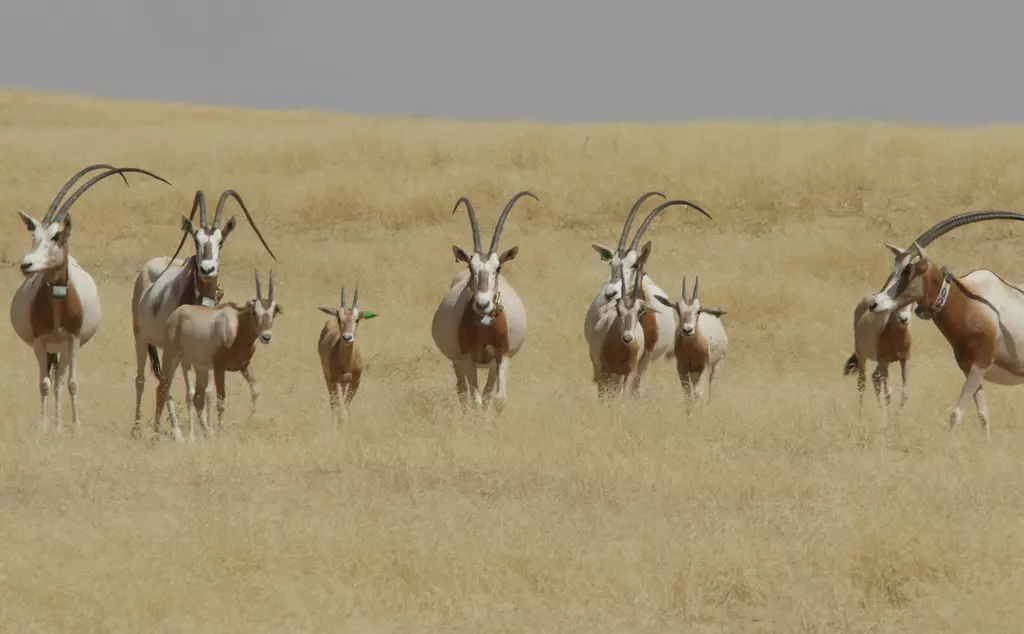
Scimitar-horned oryx live in herds of up to 40 members led by a dominant bull.


What do they eat?
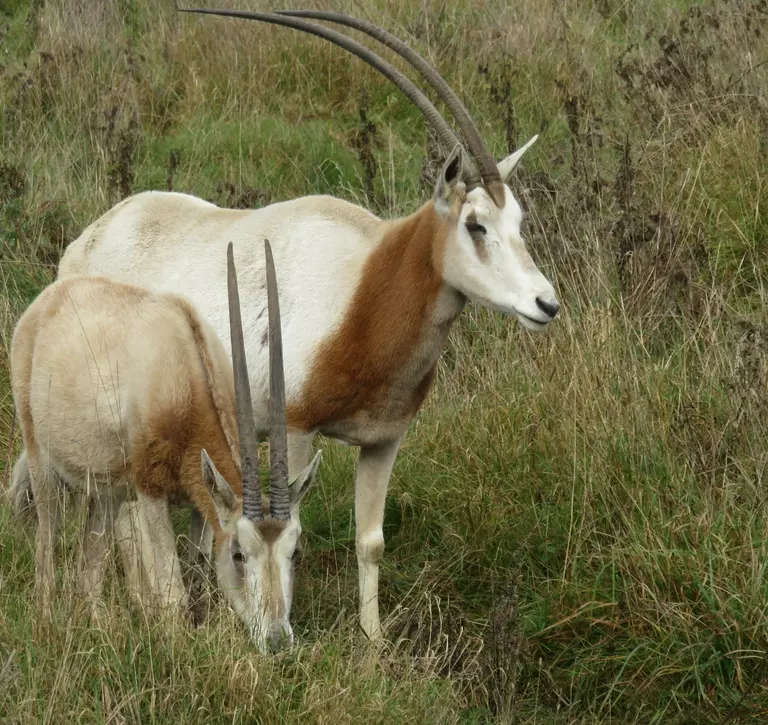
Scimitar-horned oryx are herbivores and eat grasses, as well as any herbs, roots or fruits and vegetables they can find.
They play a hugely important role in their ecosystem – as grazers they maintain the grasslands and prevent the spread of desertification.
What threats do they face in the wild?
The scimitar-horned oryx hails from Chad, in central Africa and once thrived in one of the world’s largest protected areas, the Achim Game Reserve.
Sadly, humans have posed a great threat to scimitar-horned oryx populations.
Overhunting for their horns, hide and meat, as well as habitat loss and competition with domestic livestock for food and water all contributed to their downfall.
In the 1980’s the antelopes’ population began to plummet, and the species was declared Extinct in the Wild in 2000 by the IUCN.
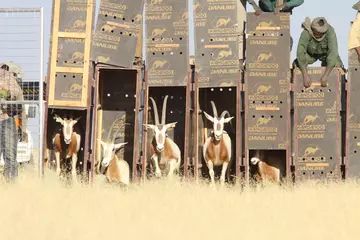
Bringing the scimitar horned oryx back from the brink of extinction – a conservation success story
In 2016 and 2017, herds of scimitar-horned oryx were successfully reintroduced back into the wild, with descendants of Whipsnade Zoo’s oryx now living and reproducing in central Africa.
Thanks to concerted efforts of conservation zoos and organisations around the world – including ZSL – there is now a self-sustaining population thriving in their native habitat within Chad’s Ouadi Rimé, at the Ouadi Achim Faunal Reserve.
In December 2023, the species was downlisted from Extinct in the Wild to Endangered on the IUCN Red List following global conservation efforts to save the species. We’re very proud of the role that conservationists at ZSL and our Whipsnade Zoo herd played in making this happen.
The first ever Scimitar-Horned Oryx Day was celebrated on 16 August 2025, raising awareness of the species and celebrating the achievements that have been made.