
South American tapir facts
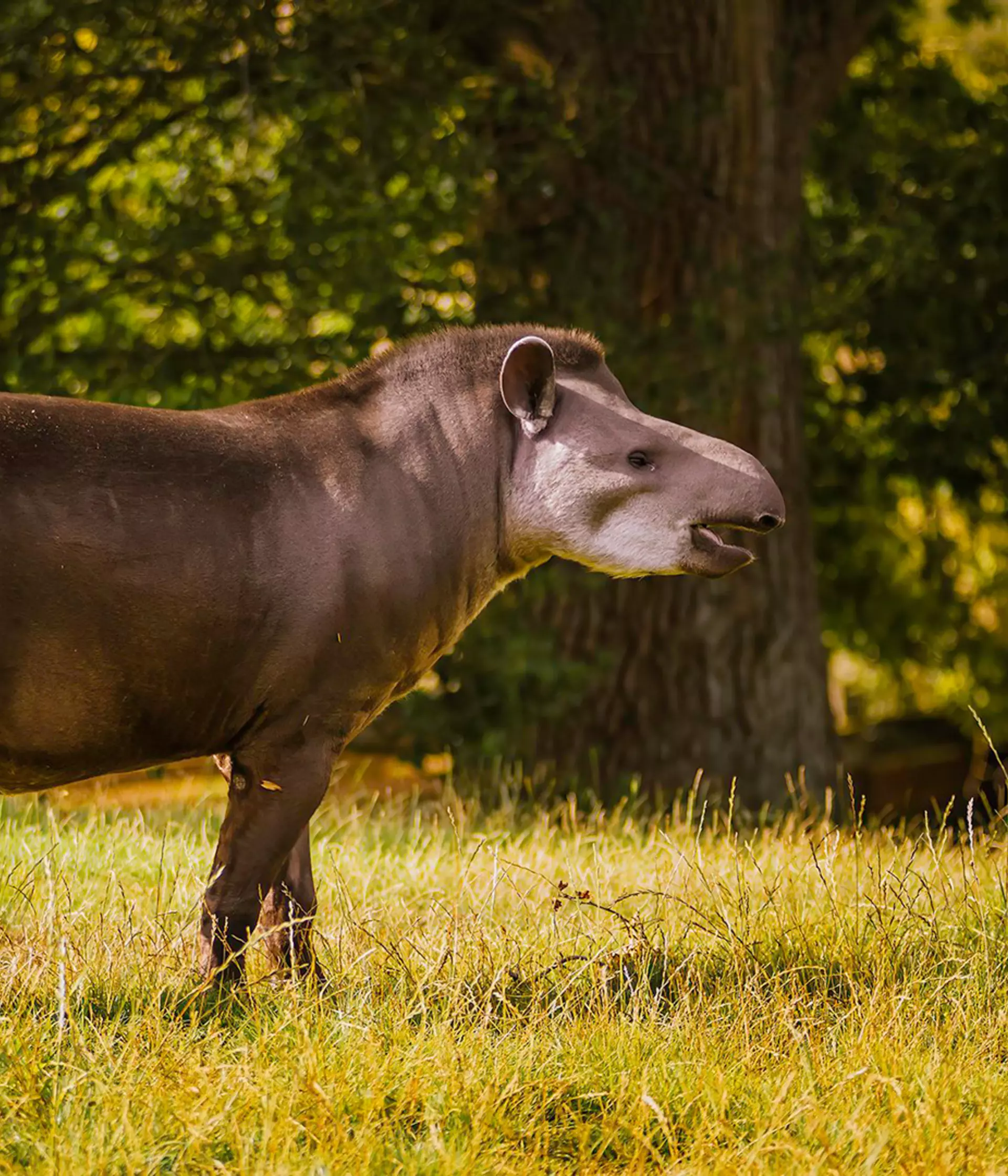
Whipsnade Zoo is home to a female South American tapir, Anna. Look out for her next to our pygmy hippo.
Five facts about South American tapirs
- They are nocturnal, so are more active at night.
- They are excellent swimmers, and can use this skill to escape from predators, like jaguars and pumas.
- They are generally solitary and known to be shy.
- They help to regenerate forests by dispersing seeds in their droppings.
- They communicate through high-pitched whistles and clicks.
What do South American tapirs look like?
These tapirs are South America’s largest native land mammal.
They have a prehensile snout, which helps them to grasp leaves and fruit – and they can use it as a snorkel when they’re swimming too!
Adult tapirs have brown coats, shades of which can vary. Baby tapirs look very different to their parents, with striped and spotted coats for camouflage to help to protect them from predators.
What do South American tapirs eat?
South American tapirs are herbivores, and have a varied diet including leaves, fruit, buds, shoots and grasses.
What threats do South American tapirs face in the wild?
Habitat destruction due to deforestation and agriculture is a major threat to the survival of South American tapirs.
How many tapir species are there?
Sometimes mistaken for a type of pig, there are four recognised species of tapir. Whipsnade Zoo is home to a South American tapir, also called a lowland tapir or Brazilian tapir. Look out for her when you next visit!