
Area of zoo
Asia
Enclosure status
Open
IUCN status
Critically Endangered
Scientific name
Sus cebifrons
Order
Artiodactyla
Type
Mammals
Family
Suidae
Region
Philippines
Habitat
Forests and Grasslands
Are there Visayan warty pigs at Whipsnade Zoo?
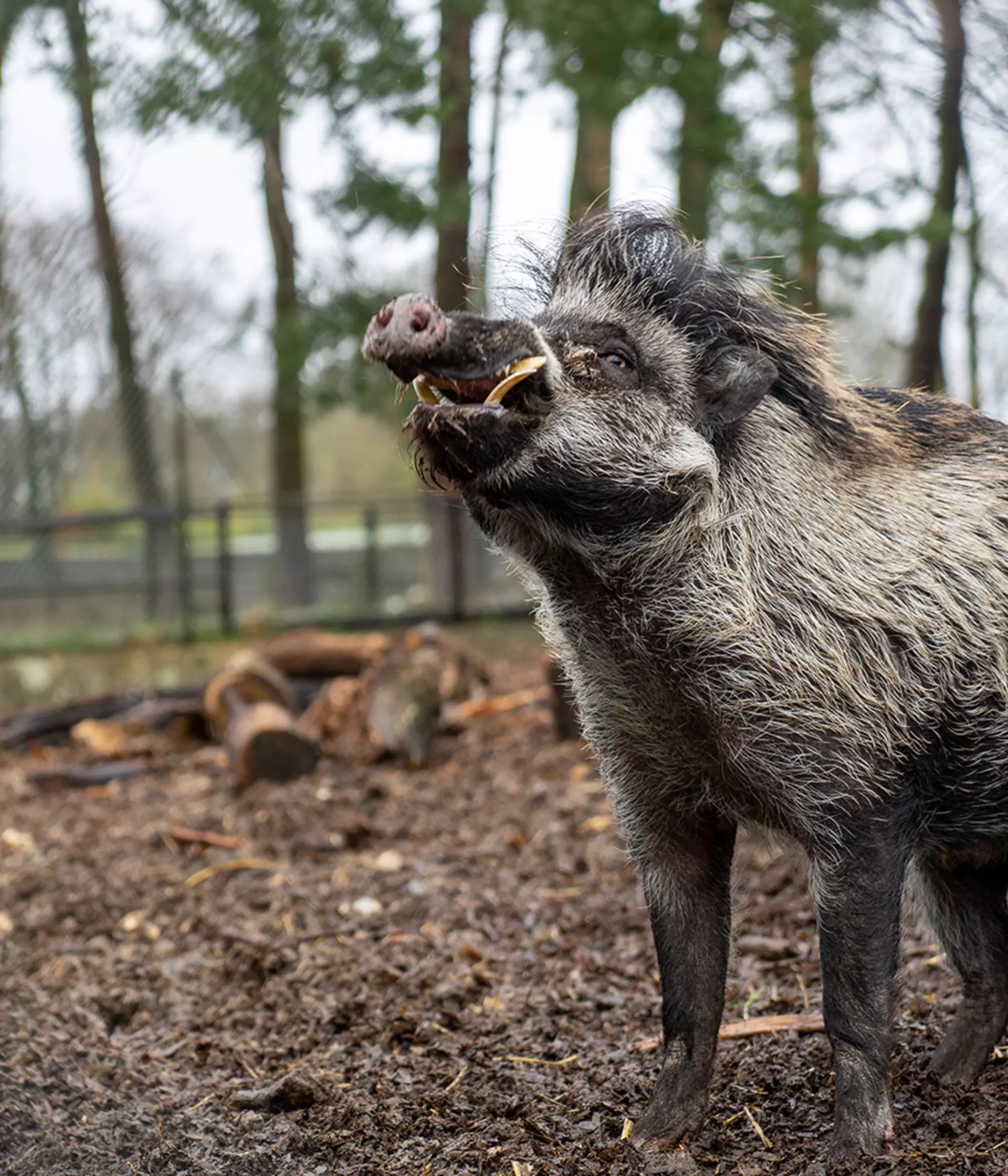
Whipsnade is home to a family of Critically Endangered Visayan warty pigs; they live opposite the yak paddock and next door to the greater one-horned rhino. Find them on our Zoo map.
The pigs are part of a conservation breeding programme which will help to boost their numbers, in a safe and protected environment, ensuring there’s a back-up population should wild reintroductions be considered the best action in the future.
What does a Visayan warty pig look like and how is it adapted to its habitat?
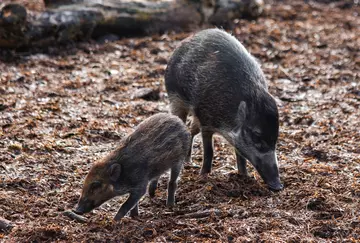
Visayan warty pigs are a small, stocky forest dwelling pig. Piglets are born ginger and stripey to keep them camouflaged in the forest, but this soon develops into a dark grey/black bristly coat with bold white facial markings. The boars are larger than the sows and grow impressive manes. They are known as the warty pig because of the warts that can be found on their faces, these are more prominent in the males.


What do they eat?
Visayan warty pigs are omnivores, with a varied diet of roots, tubers, seeds, fruits and occasional small vertebrates and invertebrates. They have incredible strong snouts for digging up treats and destroying rotten logs.
What threats do Visayan warty pigs face in the wild?
Remaining populations are highly fragmented due to illegal logging and agricultural expansion. Isolated populations make the Visayan warty pig critically endangered and an extremely important species to protect.
Whipsnade Zoo is a conservation Zoo
Whipsnade Zoo, part of global conservation charity ZSL, is more than just a Zoo. From crucial breeding programmes for endangered wildlife, to native species conservation on our 600-acre site, we're working to protect wildlife and their habitats.
Every visit helps to support our vital work right here and around the world.