
22 June 2026
Caring for elephants at Whipsnade Zoo
by Matthew Webb, Head of Zoological Operations – Whipsnade Zoo
At Whipsnade Zoo, caring for elephants is not just a responsibility, it’s a privilege. Our herd, and our exciting new arrival, are a reminder that everything we do here in Bedfordshire, is connected to the work of our global colleagues, working in Thailand, Nepal and Cameroon to protect elephants. Every day, I see first-hand how our work with elephants here ripples out into meaningful conservation impact across the globe.
Herd mentality
Elephants are deeply social animals. They live in complex, multigenerational family herds led by experienced matriarchs. These close-knit groups are essential for survival in the wild as young elephants learn everything from feeding techniques to social behaviours by observing older members of the herd.
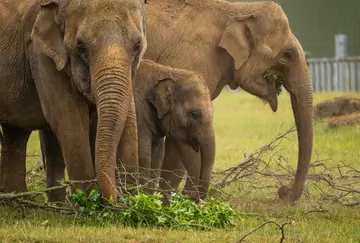
That’s why we place such importance on maintaining a multigenerational herd at Whipsnade. Our most recent calf is growing up exactly as nature intended, alongside his mother and grandmother, surrounded by the support and guidance of his wider family. We see daily how his development is shaped by these bonds, from playful social learning to moments of reassurance and care.
By nurturing these relationships, we are not just caring for individual elephants, we are supporting natural behaviours that are critical to their wellbeing.
Exceptional care
Our team of expert keepers and veterinarians works tirelessly to ensure each elephant receives the highest standard of care, with everyone’s individual personality, preferences and temperament factored in.
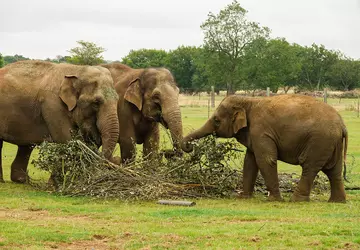
We provide a spacious, enriched habitat designed to encourage instinctive behaviours such as foraging and socialising. Elephants in the wild can travel significant distances each day, and we design our spaces to promote movement, exploration and choice.
We also use positive reinforcement training, allowing elephants to voluntarily participate in their own healthcare. This reduces stress and builds trust, a method widely employed across both London and Whipsnade Zoo, improving both physical and psychological wellbeing of all the animals we look after.
Nutrition is carefully tailored to reflect the diverse diet elephants would encounter in the wild. From browse (fresh branches and leaves) to specialised feeds, everything we provide supports their health and natural feeding habits.
We’re always learning, evaluating and adapting, and studies show it’s working – we’re seeing elephants in zoos living longer, thanks to our shared commitment to their care. At Whipsnade we’re making upgrades to our elephant habitat – from indoor facilities to new outdoor spaces.
Leading the way in elephant health: tackling EEHV
A critical part of our work at Whipsnade is advancing veterinary science to protect elephants everywhere. One of the most significant challenges facing young Asian and African elephants, both in zoos and in the wild, is Elephant Endotheliotropic Herpesvirus (EEHV), a disease that can be rapidly fatal, with 85% of known elephant calves dying from the disease.
I’m incredibly proud that our veterinary and scientific teams are at the forefront of efforts to better understand and combat this disease. At Whipsnade, we helped develop and implement a highly sensitive PCR (polymerase chain reaction) testing method to detect EEHV at low levels , which can allow for medical treatment to begin before clinical symptoms appear. Early detection is vital, as timely intervention can significantly improve survival rates.
Our elephants are regularly and proactively monitored using this testing, giving us invaluable insight into the virus and its behaviour. This work contributes to a global body of knowledge that is helping veterinarians and conservationists respond more effectively to EEHV cases worldwide.
From Whipsnade to the wild: conservation that matters
Our work doesn’t stop at the Zoo. Everything we learn from caring for elephants here contributes to conservation efforts in the wild, especially for endangered Asian elephants, whose populations are under increasing pressure from habitat loss and human-wildlife conflict.
Asian elephants are currently classified as Endangered, with populations declining by at least 50% over the past three generations (IUCN Red List, 2020). By studying elephant behaviour, health and reproduction in a carefully managed setting, we gather valuable data that helps inform conservation strategies in the wild.
We support field conservation programmes that protect elephant habitats, reduce conflict with human communities, and monitor populations. This includes working with partners across Asia and Africa to ensure that elephants, and the ecosystems they support, can thrive for generations to come.
Elephants are what scientists call a keystone species. Their movements shape landscapes, disperse seeds, and create habitats that benefit countless other species. Protecting elephants means protecting entire ecosystems.
Inspiring people to care
One of the most powerful things we can do at Whipsnade is inspire people. Every visitor who encounters our elephant herd has the opportunity to connect with these incredible animals, they can see for themselves how intelligent they are, their emotional connections to each other begin to appreciate either importance in the natural world.
By sharing our elephants’ stories, we’re helping to build a community that cares.
A shared future
For me, the most uplifting part of working with elephants at Whipsnade is knowing that everything we do is part of something bigger. Our multigenerational herd represents hope, not just for the individuals we care for, but for elephants everywhere.
Seeing our young calf thrive under the watchful presence of his mother and grandmother is a powerful reminder of what’s possible when we get it right. It reinforces our commitment to providing outstanding care, advancing conservation science, and protecting these extraordinary animals in the wild.
Together, we’re not just looking after elephants, we’re securing their future.