
24 March 2026
Thomas Maunders, a Senior Ectotherms Keeper at Whipsnade Zoo, is working with a team of experts to conserve the endangered red-necked pond turtle. Here, he explains more about the collaborative project to bring the species back from the brink of extinction.
Turtles are one of the most threatened groups of animals on the planet. Recently I travelled to China, together with other ZSL colleagues, to assess the feasibility of working to protect one of the rarest species of all: the red-necked pond turtle.
ZSL's turtle expertise
I've worked at Whipsnade Zoo for the past 11 years and am the coordinator of the European Association of Zoos and Aquariums (EAZA) international breeding programme for four species of Asian pond turtle (the Vietnamese pond turtle, Chinese stripe-necked pond turtle, the Asian yellow pond turtle, and the red-necked pond turtle, which is the species I'm going to focus on in this blog.
As well as being a zookeeper, I am also part of the EAZA Conservation Translocation Working Group, which aims to provide advice to zoos and aquariums on their reintroduction and translocation programmes. I have also assisted European governments in strengthening their legislation on turtle trading, and have assisted in the rehoming of numerous turtles that have been illegally trafficked into Europe.
In 2024, I spent two weeks in Vietnam working at a turtle conservation centre in Cuc Phuong National Park, helping to provide care for their turtles as well as undertaking research. Whilst in Vietnam I also surveyed various potential turtle reintroduction sites with the Asian Turtle Program of Indo-Myanmar Conservation to assess their suitability.
About the red-necked pond turtle
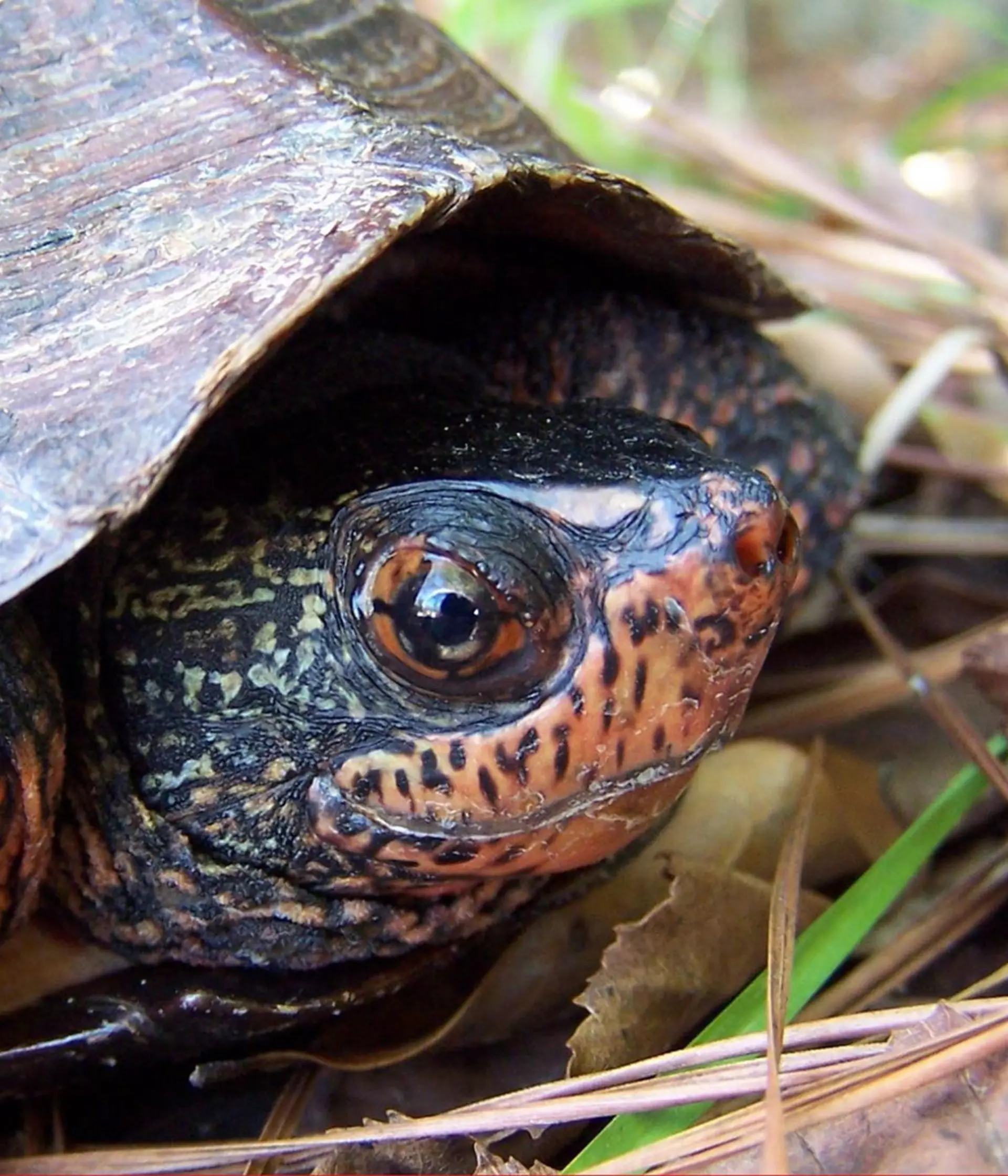
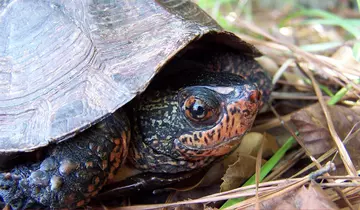
The red-necked pond turtle is an endangered freshwater turtle native to China. It has only been confirmed from mountainous regions of Guangdong and Guangxi provinces on mainland China. There have been reports of the species occurring elsewhere in China and even in Vietnam, but these records remain unconfirmed.
The species is named for its distinctive bright red neck and it is sexually dimorphic, meaning males and females can be distinguished by their appearance. Both sexes have black shells; however, males typically have brighter red necks, while females are significantly larger in size.
What threats does the red-necked pond turtle face?
What makes this species particularly interesting is its mysterious status. The red-necked pond turtle has not been seen in the wild for over 100 years, with the last recorded sightings dating back to the 1920s. It is believed that overcollection for the pet, food and medicine trade were the main threats this species faced.
All of this information raises an obvious question: why consider developing a conservation project for a species that has not been seen for a century? The answer is simple - there is still hope that the species survives, and if it does, it urgently needs protection.
The importance of collaboration in conservation
As previously mentioned, Whipsnade Zoo currently manages the international conservation breeding programme for this species across zoos in Europe and Asia. When I started coordinating this programme in 2020, there were just 21 individuals. Five years later, by working with colleagues from other zoos, the population has grown to 45 turtles.
Like many conservation programmes, this project began as an idea in 2023 and has since grown into a collaborative effort involving a specialist team of conservationists. In 2024, the ZSL team was assembled and included myself, Dr Ben Tapley, Prof. Samuel Turvey, Dr Heidi Ma, and Dr Rikki Gumbs. Together, the team brings expertise in zoology, conservation, and research, all of which are essential to the success of the project.
Reptiles and amphibians are some of the most threatened species on the planet
Pressures such as the deadly chytrid fungus, illegal trade, habitat loss and climate change have led to predictions that a large proportion of all reptile and amphibian species could go extinct over the next century.

What's the goal of the project?
The ultimate goal of the project is to rediscover and protect the red-necked pond turtle in the wild, but achieving this requires several carefully planned stages. These include understanding the types of habitats the species historically occupied and comparing them with current habitat data across China to identify areas that may still be suitable for the species. The project also involves interviewing communities and villagers to gather local knowledge that may provide clues about the turtle’s historical and current distribution.
Collaboration with colleagues in Asia is central to the project as they are able to assist with fieldwork, education and research. In addition to physically searching, water samples will be tested for environmental DNA (eDNA), which can detect the presence of turtles without the need for direct observation. If rediscovery proves impossible, the evidence collected will help determine whether the species is truly Extinct in the Wild - further emphasising the importance of the zoos' conservation programme.
Travelling to China
In December 2025, the ZSL team travelled to China for a week-long expedition to gather as much information as possible about the current status of this species. During the trip, we met with colleagues from several universities to establish collaborative connections and share knowledge. We also visited historical sites where the species was once recorded to assess whether the habitat could still support a population of turtles. The expedition was a success and the team confirmed that several historical habitats remain in reasonable condition and could potentially still support the species.


An historical site of the red-necked pond turtle
This was my first time heading out to work in China and despite working out in Vietnam in 2024 I was still unsure as what to expect. As this would be the first time I was meeting the ZSL team and our colleagues in China in person, this only added to my pre-trip nerves. After some confusion from staff at Heathrow on whether I required a visa to enter China (I did not), I was on my way!
Working in China and plans for the future
When I arrived in China, and throughout the entire trip, I was really impressed with how friendly and welcoming everyone I met was. It was incredibly easy to navigate my way around China and everyone I met spoke very good English. I am very hopefully for the future of the red-necked pond turtle and this project. I am really looking forward to getting more involved with the project and seeing how it progresses over the coming years.
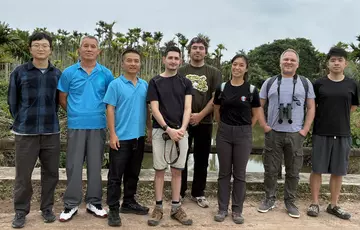
Whilst we were in China we were able to gather more information about the species through discussions with colleagues and local people. This led to the identification of five additional historical sites, and priorities were established for future surveys and eDNA sampling. Discussions were also had on how to assess the species habitat preferences and how we would map suitable environments across China. We also spoke about how we would go about expanding community surveys into new areas and how this would benefit the project. Together, these efforts provide a strong foundation for the next phase of the project and bring renewed hope for rediscovering this elusive turtle.
Whipsnade Zoo is a conservation Zoo
We're part of ZSL, a global conservation charity, and our experts are working tirelessly to care for endangered species, both in the Zoo and in the wild.