
Are there mountain bongos at Whipsnade Zoo?
We have two bongo at Whipsnade Zoo; Pembe and Kora:
- Pembe came to Whipsnade in 2020 from Howletts Wild Animal Park. He is a fully grown male bongo and weighs around 315kg.
- Kora came to Whipsnade from Marwell Zoo in April 2025. She is still a relatively juvenile female, weighing just over half of Pembe, at around 182kg.
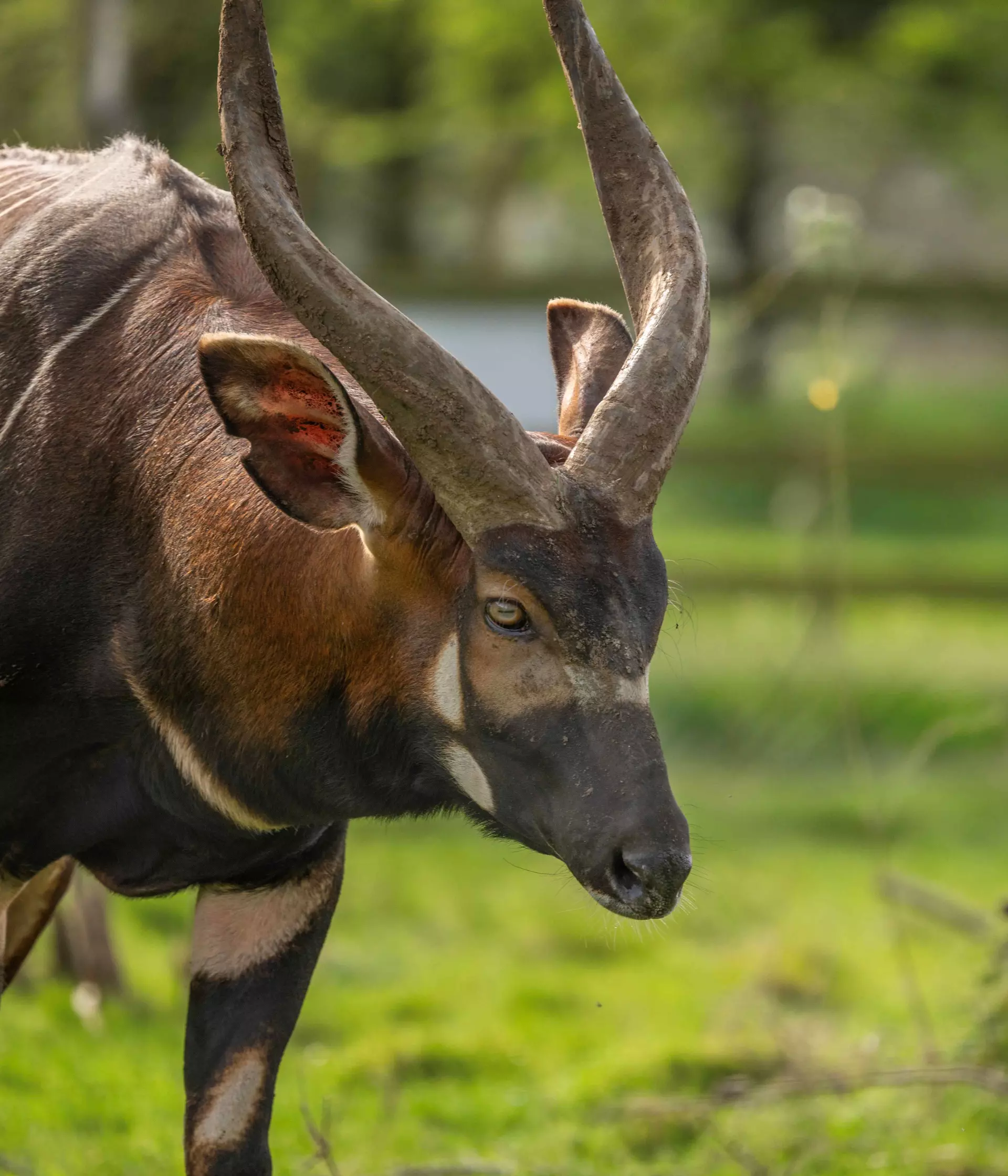
Pembe has huge horns, almost a metre long, that he loves to use to dig up the paddock. If you come to visit the bongo you may may notice areas where the grass and turf has been dug up, this is where Pembe has been throwing his weight around! Since Kora arrived, her and Pembe have spent the majority of their time together.
Both Pembe and Kora can be very people-focussed. The keepers try to keep their distance from Pembe and Kora as to manage them in a way that helps retain their natural behaviours, but they often can't resist following the keepers round and seeing what they get up to.
You'll find our bongo enclosure in the Africa area of the zoo, next to the White Rhino house and Bluebell Wood.
Bongo are primarily crepuscular and nocturnal, meaning they are most active at dawn and dusk, and during the night. Although, Pembe and Kora can often be seen browsing together underneath the trees in the bottom corner of the paddock closest to the giraffe house.
The keepers try to make their evening feed the last stop of the day at around 5/6pm in the summer and 4pm in the winter to fit in with their natural circadian rhythm, so it is likely that you will see them in the paddock then.
Mountain bongo facts

What do mountain bongo look like?
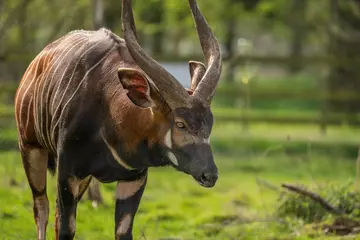
Mountain bongo have a vibrant reddish-brown coat with thin white vertical stripes along their sides and that help them to camouflage well in their forest habitat.
They also have black and white markings on their neck and legs, as well as distinct facial markings of a dark muzzle, white around their mouth, white spots on their cheeks and a white stripe between their eyes.
Both male and female mountain bongo have long spiralled horns that can reach almost a metre long.
What do mountain bongo eat?
Mountain bongo are herbivores and are mainly considered to be grazers, eating a variety of leaves, vines and bark. They have also been known to eat burnt wood (usually found after a lightening storm) to get salt and other minerals that they can't find elsewhere.
What threats do mountain bongo face in the wild?
Mountain bongo are critically endangered in the wild, under threat from habitat loss and illegal hunting with dogs. They have also been affected by diseases, such as Rinderpest, which can be caught from grazing cattle and has thought to have been another significant factor in their population decline.

Visit our mountain bongo at Whipsnade Zoo


Whipsnade Zoo tickets
Every visit to Whipsnade Zoo helps to support our vital conservation work around the world, protecting wildlife and habitats.